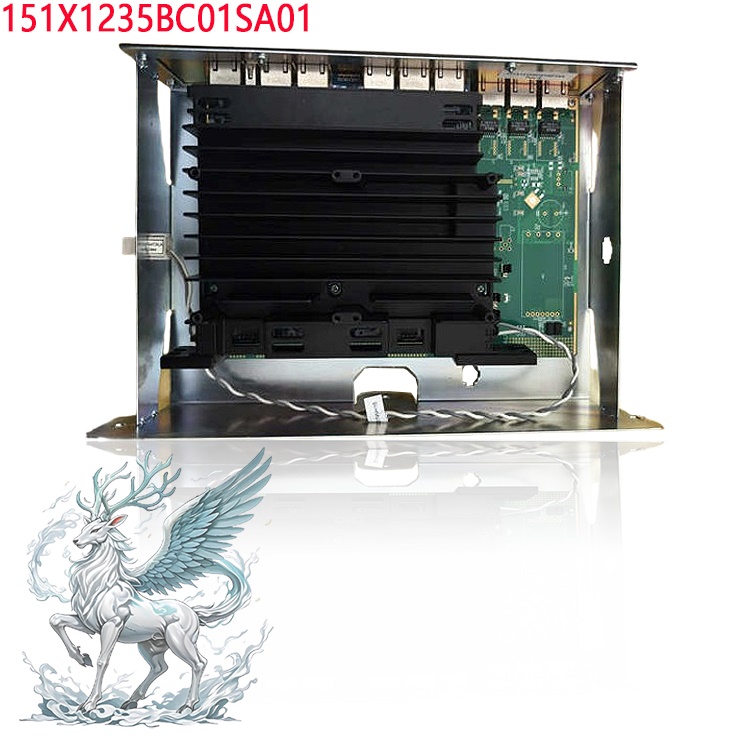
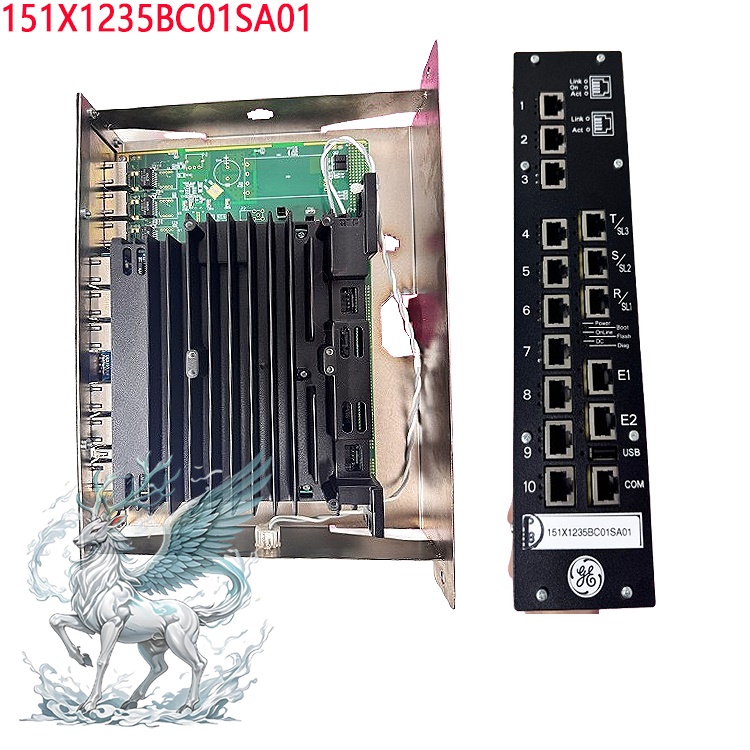
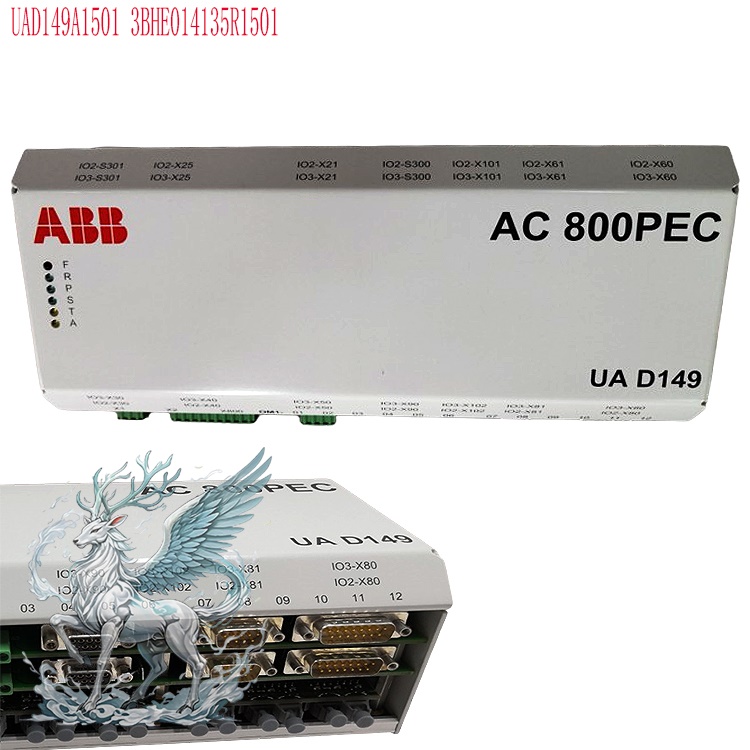
All products on this website are specialized items; their market
prices are subject to constant fluctuation.
Please rely on the quotes provided by our customer service team. As these
are new products, the prices displayed may not be final.
Before placing an order, please confirm the specific model, product
details, and pricing with our customer service representatives. We offer both
used and new units; please contact us to discuss your requirements.
Alternative names for 3BHE039724R193:
Excitation Central Processing Unit 3BHE039724R193
Excitation Controller Unit 3BHE039724R193
I. Operating Principle
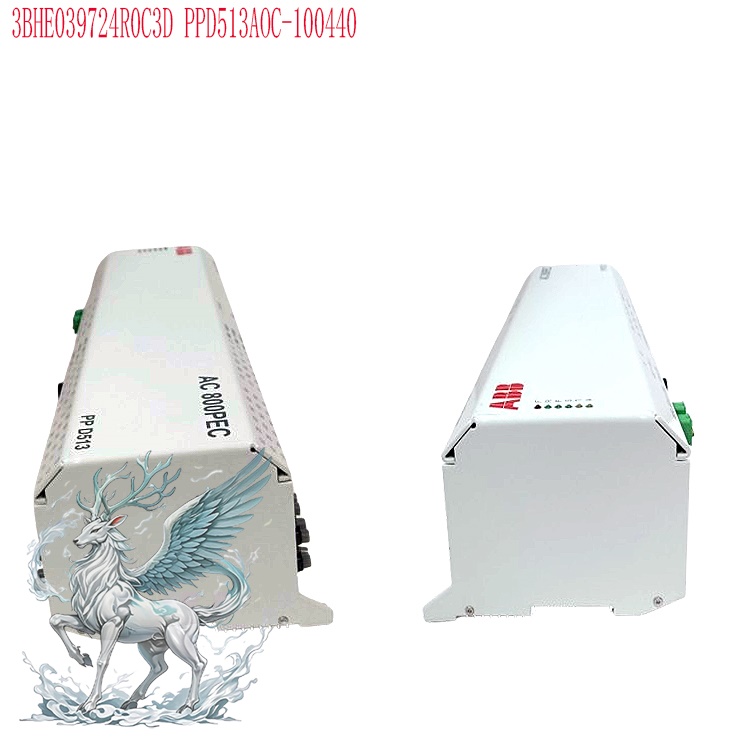
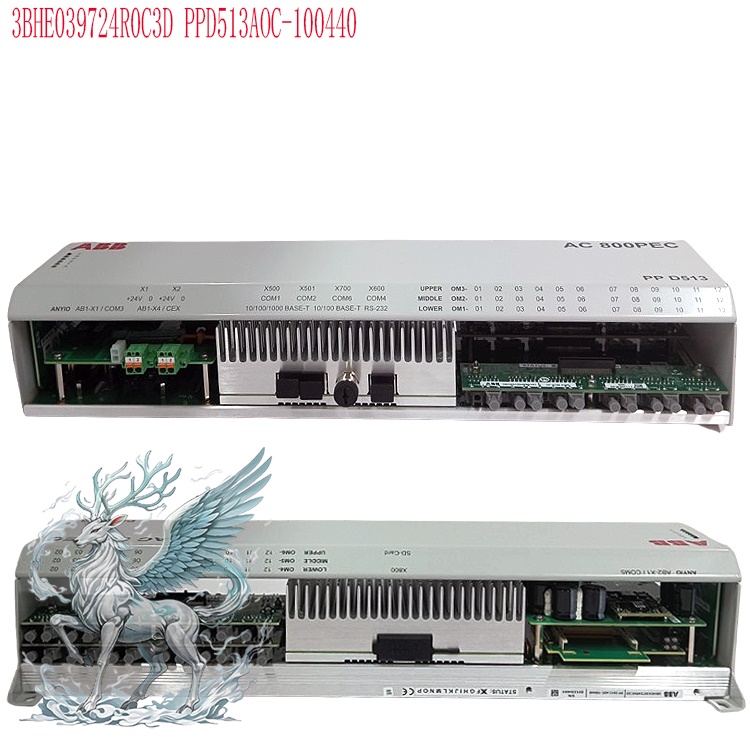
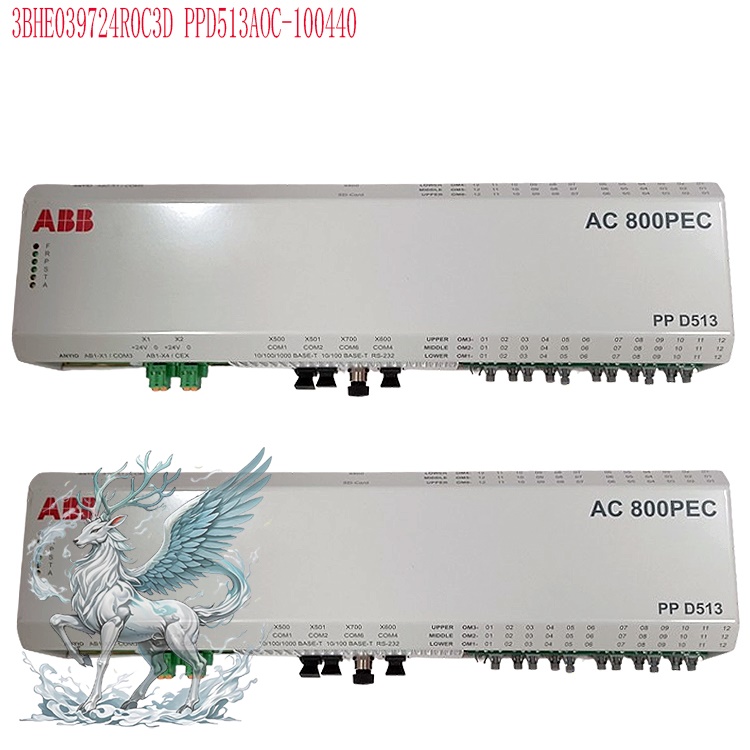
The AC 800PEC is a high-end process control platform within the ABB ControlIT product line. It utilizes a modular architecture consisting of a
backplane, processor modules, power supply modules, and fiber-optic
communication modules. Serving as the control core of this architecture, the
3BHE039724R193 operates across three distinct layers:
Real-time Control Layer: Control programs are executed in a fixed,
recurring cycle within the processor. With control cycles as fast as 100 μs, the
unit meets the requirements for high-speed, closed-loop operations—such as
current loops, voltage loops, and the generation of trigger pulses. Certain
high-speed logic functions can achieve cycle times as short as 25 μs.
Fast I/O Layer: The controller connects to fast I/O modules via a
fiber-optic PowerLink interface. A single system can support up to 36
bidirectional fiber-optic links, with read/write response times typically under
1 ms, enabling high-speed interaction for command issuance and data sampling
feedback. Process and Communication Layer: Slow-process signals—such as
temperature, pressure, and flow—are integrated via ABB S800 I/O or fieldbus. The
controller features an onboard Ethernet interface and supports expansion for
protocols including Profibus, Modbus, CANopen, and EtherNet/IP via the CEX bus
or AnyBus-S interfaces, enabling data exchange with higher-level DCS and SCADA
systems, as well as drive and excitation equipment.
Programs and data are stored in Flash memory, eliminating the need for
battery backup. Control logic can be developed using Control Builder M
(compliant with IEC 61131-3) or generated automatically from MATLAB/Simulink
models, ensuring seamless, consistent implementation from model to code to
controller.
II. Core Advantages
High-speed performance combined with general-purpose versatility: A single
controller can simultaneously execute microsecond-level fast closed-loop control
and handle conventional process control and logic interlocking, removing the
need for additional communication links between high-speed controllers and
standard PLCs.
Fiber-optic transmission with high noise immunity: Connections between the
controller, high-speed I/O, and power units utilize fiber optics. With no direct
electrical connection, the system is inherently isolated from strong
electromagnetic interference and ground potential differences—making it ideal
for environments with high levels of electrical noise, such as those involving
variable-frequency drives or rectifiers.
Modular expansion for flexible configuration: Processors, power supplies,
and fiber-optic communication modules are configured via backplane slots. The
number of I/O points and the system topology can be scaled according to process
requirements, with support for both local and remote installation.
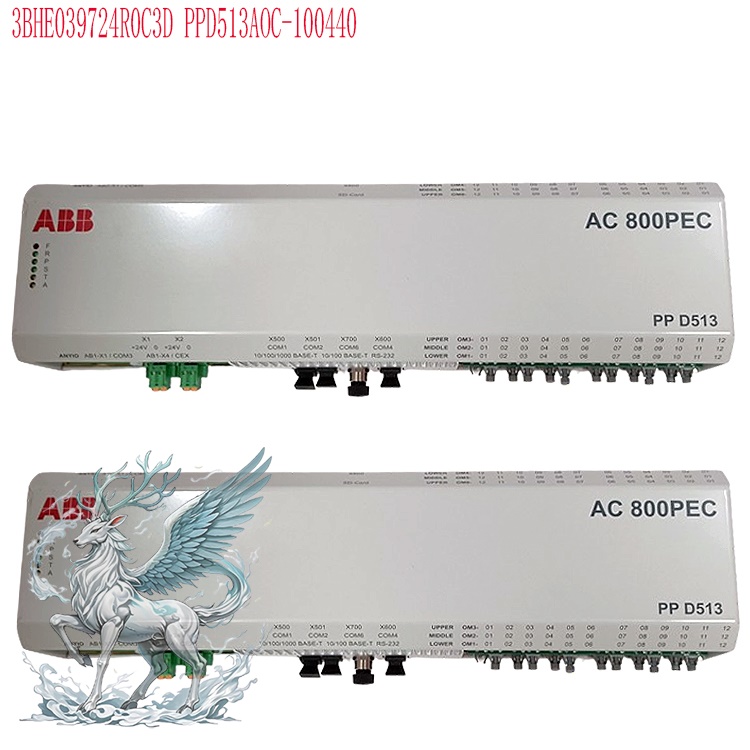
Open communication for easy integration: Equipped with dual Ethernet ports
and CEX/AnyBus-S expansion, the controller can interface with ABB 800xA and AC
800M systems, as well as third-party PLCs and supervisory systems, facilitating
seamless integration into plant-wide control networks.
Low maintenance through natural cooling: The modular, low-power design
relies on passive (natural) cooling. The fanless architecture eliminates common
failures such as dust accumulation or bearing wear. High engineering efficiency.
Supporting both graphical configuration and model-based development, the PECView
tool enables online monitoring of control variables, waveform recording, and
fault diagnosis, thereby reducing the time required for commissioning and
troubleshooting.
III. Applications in Various Industries
Power and Power Generation. Used for synchronous generator excitation
regulation, static VAR compensation (STATCOM/SVC), variable-frequency
excitation, and grid-connection control. It leverages microsecond-level cycle
times to enhance voltage response speed and dynamic stability.
Metallurgy and Rolling. Employed in main drives for rolling mills, tension
control for coiling, and high-power rectifier power supplies. It achieves rapid
current closed-loop control, improving strip thickness precision and dynamic
recovery following the impact of steel entering the mill.
Heavy-Duty Drives and Equipment Manufacturing. Utilized in high-power
variable-frequency drives (VFDs), mine hoists, marine electric propulsion
systems, and test benches, facilitating multi-motor synchronization and torque
distribution.
New Energy and Energy Storage. Applied in wind power converters,
photovoltaic (PV) inverters, and energy storage power conversion systems (PCS)
to perform high-speed power regulation and grid-connection control, improving
low-voltage ride-through (LVRT) capabilities and power tracking performance.
Rail Transit and Traction. Serves as a control platform for traction
converters, handling pulse generation, torque control, and fault protection,
while remaining robust enough for environments characterized by frequent
start-stop cycles and wide temperature ranges.
IV. Operating Procedures
(I) Installation and Power-Up
Ensure the control cabinet is powered off. Insert the modules into their
designated slots on the backplane—as indicated by the labels—and secure them.
Verify the supply voltage and polarity. Power on the system in the following
sequence: control power first, followed by the power circuit. Observe the panel
indicator lights to confirm the system has entered its normal operating
state.
(II) Wiring and Communication Configuration
Connect fiber-optic cables in pairs (transmit and receive ports), ensuring
they are not reversed. Connect S800 I/O and fieldbus components to their
corresponding ports as specified in the technical drawings. Next, configure the
controller’s IP address, station number, and communication parameters at the
engineering station, ensuring it resides on the same network segment as the
supervisory system.
(III) Configuration and Program Download
In Control Builder M, create the project, configure the hardware topology
and control task cycles, and develop or import the control logic. Once compiled,
download the configuration to the controller and verify that the downloaded
version aligns with the on-site process requirements.
(IV) Commissioning and Operational Monitoring
Use PECView to connect to the controller, monitor key control variables,
and track deviations between setpoints and actual values; perform waveform
recording and analysis if necessary. Conduct testing in stages—first without a
load, then under load—to verify the correct operation of interlocks and
protection functions.
(V) Backup and Maintenance
Upon completion of commissioning, export the project files, hardware
configuration, and parameter backups. Maintain an inventory of spare
parts—including module order numbers, firmware versions, and replacement
dates—to facilitate rapid replacement in the future.
V. Precautions
Electrostatic Protection: Modules are sensitive to static electricity. Wear
an anti-static wrist strap when handling them, and avoid touching circuit boards
or connector pins directly.
Fiber Optic Handling: Clean the end faces before insertion or removal to
prevent contamination from dust or oil. Ensure an adequate bend radius during
cable routing to avoid fiber core breakage or excessive signal attenuation.
Prohibition of Hot-Swapping: Processor modules, power supply modules, and
fiber optic modules must only be handled when the power is disconnected;
hot-swapping can damage the backplane or the modules themselves.
Power Supply and Grounding: Use a stable, "clean" control power supply.
Implement protective grounding and shielding in accordance with relevant
standards, and avoid sharing power circuits with high-power equipment that may
cause significant interference.
Environment and Heat Dissipation: Ensure proper ventilation within the
cabinet and maintain the ambient temperature within the specified range. Provide
sufficient space around modules for heat dissipation to prevent reduced service
life caused by prolonged high-temperature operation.
Spare Part Consistency: When replacing the unit, verify the complete suffix
of the order code, as well as the hardware and firmware versions. Variants of
the 3BHE039724R193 with different suffixes may differ in terms of interfaces or
parameters; please refer to the manufacturer’s official datasheet for accurate
specifications.
Interlocks cannot be bypassed. During commissioning, do not short-circuit
or disable safety interlocks, emergency stops, or overspeed protection circuits
for the sake of convenience.
Sourcing and Authenticity. When procuring, select suppliers that can
provide test reports and quality guarantees. Avoid using refurbished or salvaged
components, as these can compromise system stability.
Conclusion
The ABB AC 800PEC controller—represented by the 3BHE039724R193—is valuable
for integrating microsecond-level high-speed closed-loop control with
conventional process control on a single platform. Its fiber-optic isolation and
modular architecture make it well-suited for industrial environments
characterized by high levels of electromagnetic interference and stringent
reliability requirements. Proper selection, standardized installation, and
regular backups and maintenance are essential to maximizing its performance and
extending its service life.
Recommended products:
3BHE014135R0001 UAD149
3BHE014135R1501 UAD149
3BHE021013R0001 PDD163
3BSE025344R0101 PFVL 141R
3BSE025094R2500 PFVL 141V
3BSX670292-112 PFVL141C
3BSE024388R1 PFXA401
3BSE018732R1 PFVI401
DRS2170 ABB
PGC5009 ABB
PGC5007 ABB
PGC5000C ABB
PGC5000A ABB
PGC5000B ABB
More......


 ABB
 GE
 HONEYWELL
 TRICONEX
 KONGSBERG
 EMERSON
 FOXBORO
 MOTOROLA
 VIBRO-METER
 ICS TRIPLEX
 WOODWARD
 BENTLY NEVADA
 OTHER
 Home
.jpg)
.jpg)