Many products have not yet been listed online; please contact us for
information on additional items.
If there is a discrepancy between a product model and its displayed image,
the model number shall take precedence. Please contact us if you would like to
see specific product photos; we can arrange for them to be taken at our
warehouse for verification.
We operate 76 shared warehouses globally, so it may occasionally take a few
hours to provide you with an accurate response. We appreciate your patience and
will address your inquiries as quickly as possible.
Alternative names for 3BSE010547R1:
I/O Module 3BSE010547R1
Main Control Board 3BSE010547R1
Analog Module 3BSE010547R1
I. Operating Principle
The ABB 3BSE010547R1 relay board receives low-voltage control signals from
the main controller, which trigger the onboard electromagnetic relay coils to
open or close their contacts. This provides electrical isolation between the
control circuit and the load circuit, converting low-power digital signals from
the controller into passive "dry contact" outputs. These switching signals are
used to activate or deactivate field loads such as solenoid valves, indicator
lights, alarm circuits, and auxiliary contactors. The board features four
independent relay channels, with each set of contacts operating autonomously
without mutual interference. When the controller sends an "ON" signal, the
corresponding relay engages, closing the contacts. When the signal is removed,
the relay releases, opening the contacts. By utilizing mechanical contacts, the
unit provides a passive switching output—it does not supply external power, but
rather transmits the state (on/off) of the circuit.
II. Product Advantages
Safe and Reliable Electrical Isolation: By isolating the control side from
the field load side, the unit blocks external interference and voltage surges,
protecting the controller’s I/O ports and reducing the risk of damage to control
cards caused by high-voltage transients. Passive Dry-Contact Output: Features a
dry-contact design compatible with various AC/DC voltage circuits. Users have
the flexibility to configure the load power supply, ensuring broad compatibility
with diverse alarm, interlocking, and indication circuits.
Independently Controllable Channels: Equipped with four relay channels that
operate independently; a failure in one channel does not affect the others,
facilitating zoned commissioning as well as individual component maintenance or
replacement.
Industrial-Grade Durable Construction: Built with original-manufacturer
PCBs and industrial-grade relays, the unit offers high resistance to vibration
and electromagnetic interference. It is designed for continuous, long-term
operation within control cabinets and is well-suited for long-term storage as a
system redundancy spare.
Convenient Integration and Installation: Features onboard standard terminal
blocks and a compact design, making it easy to mount securely inside control
cabinets. The clear wiring layout simplifies field installation and
troubleshooting.
Dedicated Model: Custom-designed for the Millmate Controller 400 thickness
measurement system. It offers seamless protocol and interface compatibility,
requiring no additional conversion modules and allowing for direct, one-to-one
replacement of legacy components.
III. Applicable Industries and Functions
Metallurgical Industry (Core Application): Used in steel rolling production
lines as part of the Millmate thickness measurement and control system. It
provides output signals for thickness-limit alarms, fault interlocking,
auxiliary start/stop control for roller tables, and audible/visual
alarms—enabling rapid interlocking protection during thickness anomalies to
ensure rolling precision and production line safety.
Paper Industry: Utilized in thickness and moisture detection/control
systems for paper machines. It provides outputs for limit alarms and "paper
break" protection interlocks, triggering valves, alarm lights, or machine
shutdown circuits.
Non-Ferrous Metal Processing: Employed in aluminum sheet and copper strip
rolling lines. It serves as a signal interface for thickness gauges, enabling
process-limit warnings and equipment interlocking control.
General Process Automation: Functions as an isolation relay board for
factory DCS and PLC systems, supporting alarm circuits, pump/valve status
feedback, and the operation of field indicator lights. Building Materials and
Film Production Lines: Used in conjunction with online inspection equipment,
this unit provides isolated switching signal outputs, isolating internal control
signals from the inspection equipment to drive field-side actuators.
Overall Function: Acts as an isolated relay unit within online inspection
and control systems. It provides electrical isolation between high-voltage and
low-voltage circuits and transmits interlocking switch signals. It allows
low-voltage signals from precision inspection controllers to safely drive
high-power field peripherals, facilitating functions such as fault alarms,
safety interlocks, and status indication. It serves as a critical interface
component, ensuring the stability of the inspection system and protecting the
core controller from damage caused by field-side interference.
IV. Operating Procedures
Pre-installation Verification: Before installation, verify that the
model—3BSE010547R1 —matches the existing spare part. Ensure the power
is disconnected. Prepare the appropriate screwdriver for the terminals and a
multimeter; implement electrostatic discharge (ESD) protection measures,
including wearing an anti-static wrist strap.
Removing the Old Board: Disconnect the main power supply for the entire
control system. Once it is confirmed that there is no power, label each existing
terminal connection, disconnect the wires one by one, and remove the old relay
board.
Installation and Wiring: Secure the new ABB 3BSE010547R1 relay board into
its designated position within the control cabinet. Reconnect the control wires
and field load wires according to the terminal definitions and the labels
previously applied. Ensure a clear distinction between the controller-side
signal lines and the field-side load contact circuits; do not mix them up.
Wiring Inspection: After completing all wiring, use a multimeter (in
continuity mode) to verify that there are no short circuits, incorrect
connections, or loose contacts. Also, ensure there are no short circuits to the
ground within the load circuits.
Power-up and Commissioning: Once the wiring has been verified as correct,
power on the main controller. Use the control system software to force-activate
the output channels, testing the engagement and disengagement of each relay
sequentially to ensure the contacts are functioning properly. Commissioning:
Once all channels have been tested and confirmed to operate correctly—with no
abnormal heating or unusual noises—the system may be switched back to automatic
mode for regular production use.
Maintenance and Replacement: During subsequent inspections or component
replacements, strictly follow the established procedure: disconnect power, label
all wiring, and ensure correct alignment when reconnecting.
V. Precautions
Power-Off Requirement: All installation, wiring, and maintenance tasks must
be performed only when the power is completely disconnected. Never plug or
unplug connections while the system is powered; doing so can cause electrical
arcing or the introduction of high voltage, which may destroy the
controller.
Load Limits: Ensure that connected loads do not exceed the rated capacity
of the relay contacts; overloading is strictly prohibited. For inductive loads
(such as solenoid valves or contactor coils), it is recommended to install
external surge suppression components to extend the relay's lifespan and
mitigate back-EMF (electromotive force).
Electrostatic Protection: As the circuit board contains precision
electronic components, avoid touching the PCB copper traces or relay pins
directly with your hands. Static electricity can cause latent damage; store
spare parts in anti-static packaging.
Environmental Control: The installation environment must be free from dust
accumulation, corrosive gases, condensation, and excessive heat. Ensure the
control cabinet remains well-ventilated and keep the unit away from strong
sources of interference, such as high-power variable frequency drives (VFDs) or
electric motors.
Wiring Distinction: This board utilizes passive "dry contact" outputs,
which require an independent external power supply for the contact circuit. Do
not connect low-voltage controller signals to the same terminal block as
high-voltage field power.
Troubleshooting: If contacts fail to engage, become stuck (welded), or if
the board exhibits abnormal heating, disconnect the power immediately.
Investigate the external load for short circuits; do not repeatedly attempt to
power the unit on for testing. Contact welding is a critical failure—do not
continue to use the unit in any interlocking circuit. Spare Parts Storage: Spare
parts must be stored in a dry, cool environment to prevent moisture-induced
oxidation. When replacing components, prioritize the use of new,
original-manufacturer parts to ensure compatibility with the Millmate 400
system.
Prohibition of Modifications: Unauthorized modifications to board circuitry
or the installation of non-original relays are strictly prohibited. Such
alterations may compromise the original isolation capabilities, potentially
leading to the failure of system interlocks and creating safety risks.
Recommended products:
3BHE014135R0001 UAD149
3BHE039724R193 PPD513A
PPD513A19-151000 3BHE039724R193
3BHE039724R2565 PPD513A
3BHE014135R0001 UAD149
3BHE014135R1501 UAD149
3BHE021013R0001 PDD163
3BSE025344R0101 PFVL 141R
3BSE025094R2500 PFVL 141V
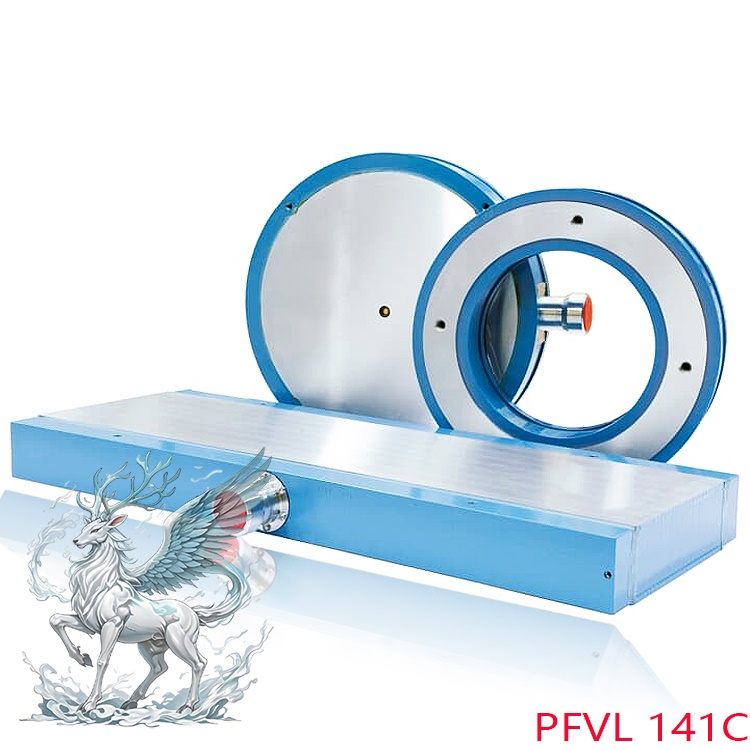
3BSX670292-112 PFVL141C
3BSE024388R1 PFXA401
3BSE018732R1 PFVI401
More......
1.Do you offer global shipping?
Yes. We have local distribution centers on every continent, enabling us to quickly ship parts to anywhere in the world.
2. What payment methods and currencies do you accept?
To make your purchasing process as simple and convenient as possible, we offer a variety of payment methods, including bank transfer, cheque, and PayPal. We also accept most major credit and debit cards, such as Visa, Mastercard, and American Express. We accept payments in most major global currencies, but we recommend using US Dollars (USD), British Pounds (GBP), or Euros (EUR). Using other currencies may incur additional fees. All transactions are securely processed by HSBC and HSBC Merchant Services.
3.How much parts do you currently have in stock?
We have a vast inventory of new, refurbished, and used automation components, including products from well-known manufacturers such as ABB and Schneider Electric. If you can't find the part you need, don't worry. We work closely with professional suppliers worldwide, and even if the part you need isn't listed on our website, we can provide you with a tailored quote.
4.Who should I contact if I encounter any problems?
Our experienced customer service team will handle any issues after you place your order.


 ABB
 GE
 HONEYWELL
 TRICONEX
 KONGSBERG
 EMERSON
 FOXBORO
 MOTOROLA
 VIBRO-METER
 ICS TRIPLEX
 WOODWARD
 BENTLY NEVADA
 OTHER
 Home
.jpg)


.jpg)
.jpg)