Please note that all products listed on this website are specialized items
subject to frequent market price fluctuations.
The prices shown are not definitive; please consult our customer service
team for accurate, current pricing. As these are new products, please verify the
specific model, product details, and pricing with our customer service
representatives before placing an order.
Alternative names for the PFCL201CD-5KN:
PFCL201CD-5KN Vertical-Measurement Sensor
PFCL201CD-5KN PillowBlock Sensor
I. Operating Principle
The PFCL201CD-5KN utilizes the magneto-elastic effect (patented
Pressductor® technology) for force-to-signal conversion, distinguishing it from
conventional strain-gauge sensors. The sensor body is machined from a single
solid piece of stainless steel and contains two sets of orthogonal windings. An
alternating excitation current is applied to the primary winding to generate a
base magnetic field. In an unloaded state, the magnetic coupling between the
orthogonal windings cancels out, resulting in no effective output signal from
the secondary winding. When a strip material is in motion, tension is applied to
the tension-measuring roller; the roller housing transmits the vertical
component of this force to the load-bearing surface of the PillowBlock sensor.
The magnetic permeability of the steel within the load-bearing area changes in
response to the mechanical load, causing a shift in the magnetic field
distribution. This allows the primary magnetic field to couple with the
secondary winding, producing an AC induced voltage that is linearly proportional
to the applied force. A compatible PFEA111/PFEA112 tension amplifier unit
filters, rectifies, and processes this induced signal, outputting a standard
4–20 mA analog signal. This signal is then sent to a tension controller or PLC,
where it is converted into a real-time strip tension value, enabling closed-loop
tension control. The sensor is sensitive exclusively to loads in the vertical
measurement direction, offering robust rejection of lateral and axial
interference forces. Its design involves no mechanical deformation and operates
via a non-contact sensing mechanism, eliminating the risk of fatigue failure
typically associated with strain gauges.
II. Core Product Advantages
Exceptional Overload Tolerance: Featuring an ultra-rigid body, the sensor
can withstand significant instantaneous overloads and high-impact forces—such as
those caused by strip breakage or the sudden starting and stopping of a
production line. Highly durable, it is well-suited for heavy-industrial coil
processing lines characterized by high load fluctuations.
Long-term Stability and Low Drift: Utilizing a magneto-elastic measurement
principle, the sensor is free from creep and the aging issues common to strain
gauges. It maintains excellent long-term zero-point stability and high
repeatability, eliminating the need for frequent calibration-related downtime
and significantly reducing maintenance requirements.
Superior Interference Immunity: The sensor outputs a high-power,
low-impedance AC signal, providing strong immunity against electromagnetic
interference (EMI) from sources like variable-frequency drives (VFDs) and
motors, as well as ground faults. The signal remains stable even over long
transmission distances, making it ideal for complex industrial electrical
control environments.
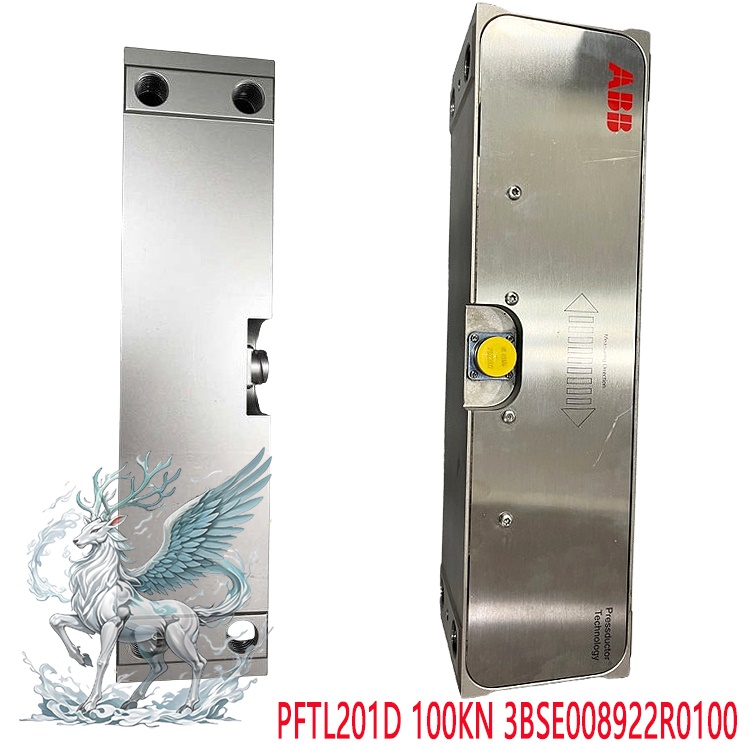
Robust, Integrated Pillow-Block Design: Constructed from a solid stainless
steel base with internally encapsulated components, the sensor offers a high
ingress protection (IP) rating, ensuring resistance to moisture and dust. A
corrosion-resistant version is also available for harsh environments, such as
pickling or galvanizing lines. The PFCL201C model features a pre-installed,
fixed cable with an integrated sealed connector, preventing issues like loose
wiring or water ingress.
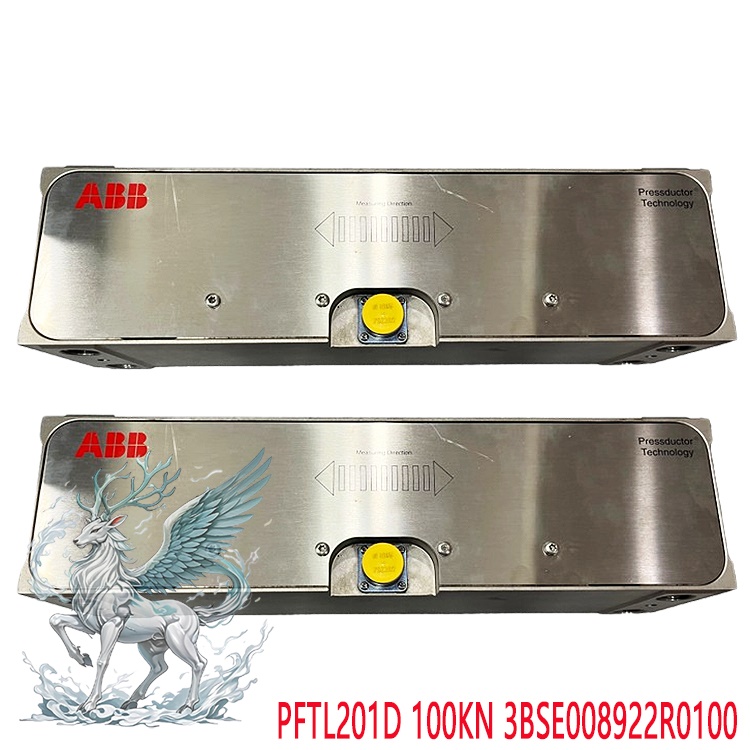
Bidirectional Force Measurement and Flexible Installation: Capable of
measuring both compressive and tensile loads, the sensor supports mounting on
horizontal, inclined, or vertical surfaces. It is designed to be installed
directly beneath the bearing housing of a tension roller, making it compatible
with the frames of conventional rolling mills, rewinders, and coating
machines.
High System Compatibility: The output signal can be integrated with ABB
tension control units, standard PLCs, servo control systems, or magnetic
particle clutches/brakes, facilitating the easy implementation of fully
automated, closed-loop tension control systems.
III. Relevant Industries and
Applications
1. Metallurgical Industry (Cold Rolling, Galvanizing, Pickling, and
Annealing Lines)
Used for tension monitoring during the continuous processing of steel
strips, copper foils, and aluminum foils. It enables stable, real-time tension
control, preventing strip deviation, wrinkling, or breakage. This ensures
uniform strip shape, reduces defects and unplanned downtime, and maintains
consistency across continuous rolling and surface treatment processes.
2. Paper Manufacturing and Processing Industry
Used for web tension detection in rewinders, coaters, slitters, and
high-speed paper machines. By maintaining constant web tension, it prevents
paper stretching, deformation, tearing, and uneven thickness. It also stabilizes
coating quality and improves the yield of finished products, including base
paper, specialty paper, and kraft paper.
3. Plastic Film and Flexible Packaging Industry
Used for tension acquisition during the production, slitting, printing, and
lamination of films—such as BOPP, PET, and CPP—as well as composite films and
cling wrap. It prevents film stretching, thickness deviations, and inconsistent
winding tightness, ensuring precise printing registration and improving the
neatness of the roll end faces.
4. Lithium-ion Battery and Advanced Materials Industry
Used for tension detection in the slitting, coating, and winding equipment
for copper foils, aluminum foils, and battery separators. Given the fragile
nature of separators and electrode foils, stable tension control is critical to
prevent the stretching of electrode sheets or the tearing of separators. This
ensures the consistency of battery substrate materials and reduces the defect
rate of battery cells.
5. Textile and Chemical Fiber Industry
Used in production lines for chemical fiber filaments, non-woven fabrics,
geotextiles, and the heat-setting, dyeing, and finishing of various textiles.
Control the tension of fabrics and filaments during processing to prevent
material stretching, skewing (weft distortion), and surface defects, while
ensuring uniform color distribution during dyeing and finishing.
6. Cable and Rubber Industries
Monitor tension in production lines for rubber belts, fiber ropes, and
cable sheathing (extrusion). This ensures a consistent thickness of the coating
layer and prevents damage to the substrate caused by excessive stretching.
General Industry Value: Enables digital, real-time, closed-loop automatic
tension control throughout the unwinding and rewinding processes. Reduces scrap
rates caused by material breakage, stretching, or misalignment; minimizes the
need for manual monitoring and adjustment; ensures consistent product quality
across batches; provides tension data logging and threshold alarms; and supports
data acquisition for smart manufacturing.
IV. Standard Operating Procedures
Installation and Positioning: Secure the PFCL201CD-5KN pillow-block sensor
onto a rigid base, and mount the tension roller bearing housing onto the
sensor’s load-bearing surface. Ensure that the wrap angle and the geometric
configuration of the applied force align with the technical drawings. Verify
that the resultant force generated by the tension is perpendicular to the
sensor’s measurement surface, while minimizing any lateral forces. Tighten all
mounting bolts securely to prevent any looseness in the machine frame.
Wiring: The CD model comes with an integrated cable; ensure the cable
shield is grounded at a single point. Route signal cables separately from power
cables, keeping them away from high-power equipment such as variable-frequency
drives (VFDs) and contactors. Connect the cable end to a compatible PFEA tension
transmitter, which then outputs an analog signal to a PLC or tension
controller.
Power-up and Warm-up: After verifying that all wiring is correct, power on
the system and allow it to warm up for 15–30 minutes to ensure the temperatures
of the sensor and the amplification unit have stabilized.
Zero Calibration: With the material completely slack and the roller under
no load, perform a zero-calibration (tare) operation to eliminate any zero-point
offset caused by the dead weight of the roller and its housing. Full-scale
calibration (as required): Apply a load to the sensor using standard weights or
a known tensile force to perform a full-scale calibration, matching the 5 kN
rated capacity. Save the parameters once calibration is complete.
Commissioning: Start the production line. The controller will read the
tension signal; configure the target tension, PID parameters, and the
upper/lower tension alarm thresholds. Upon startup, observe the tension values
to ensure they change smoothly in response to operational conditions,
confirming that the closed-loop control is functioning correctly.
Routine inspection and recording: Continuously monitor the tension curve
and periodically record the zero-point status. Halt operations to investigate if
any anomalies occur.
V. Precautions for Use
Direction of applied force: Loads must be applied only in the specified
vertical measurement direction. Avoid subjecting the sensor to significant
lateral forces or torsional moments over extended periods; lateral overloads can
cause permanent shifts in sensor accuracy or even structural damage.
Overload specifications: While the sensor possesses high resistance to
transient overloads, it must not be operated under loads exceeding the 5 kN
rated capacity for extended periods. Impacts resulting from strip breakage are
considered permissible transient events; however, mechanical limit stops should
be installed to provide secondary protection.
Mounting base rigidity: The mounting base must be sufficiently heavy and
rigid. Deformation of the base or vibration of the machine frame can introduce
measurement errors; therefore, the sensor must not be mounted on thin-walled or
elastic supports.
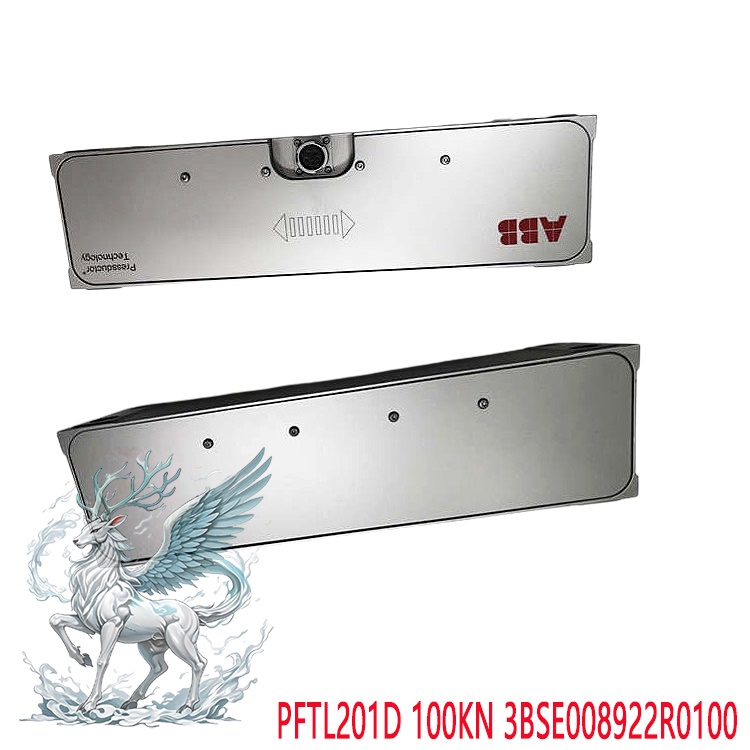
Cable protection: The PFCL201C model features a fixed cable; avoid
subjecting the cable to sharp bending, crushing, or dragging. Ensure that cable
connectors are not submerged in or exposed to strong acids or alkalis for
prolonged periods. In corrosive environments, implement appropriate
anti-corrosion protective measures.
Electromagnetic isolation: Signal cables must be shielded and grounded at a
single point; avoid multi-point grounding, which can create ground loops and
interference. Route signal cables and power cables through separate conduits to
minimize interference from variable-frequency drives (VFDs). Ambient
Temperature: Maintain the temperature within the product’s specified operating
range. Avoid localized overheating, as well as rapid heating or cooling. In
humid environments, ensure proper drainage for the mounting frame to prevent
long-term corrosion caused by condensation.
No Mechanical Processing or Impact: Do not drill, grind, strike, or subject
the tension sensor body to any form of mechanical impact. Any such action will
permanently damage the magneto-elastic core, resulting in a permanent loss of
measurement accuracy.
Calibration and Maintenance: Zero-point calibration must be performed
following major production line overhauls, disassembly or reassembly of the
mounting frame, or after restarting the system following a long period of
downtime. If tension readings fluctuate erratically or drift, first check for
loose mounting or damaged cables; do not repeatedly recalibrate the unit without
cause.
Component Compatibility: The sensor must be used with the corresponding
series of ABB tension amplifier units. Using incompatible signal acquisition
modules can lead to signal loss and degraded linearity.
Safety Protocols: All wiring, assembly, and disassembly operations must be
performed while the power is disconnected. During the commissioning of the
tension system, apply loads gradually to prevent the strip material from
ejecting and causing injury.
Recommended products:
ABB PFCL201C-5KN
ABB PFTL201DE-100KN
ABB PFTL201D-100KN
ABB PFTL201DE-50KN
ABB PFTL201D-50KN
3BSE004191R1 PFTL101B
3BSE004203R1 PFTL101B
3BSE007913R0010 PFTL201C
3BSE007913R50 PFTL201C
3BSE008922R0100 PFTL201D
3BHE029063R0101 PAD238 A101
More......


 ABB
 GE
 HONEYWELL
 TRICONEX
 KONGSBERG
 EMERSON
 FOXBORO
 MOTOROLA
 VIBRO-METER
 ICS TRIPLEX
 WOODWARD
 BENTLY NEVADA
 OTHER
 Home
.jpg)
.jpg)