Many products are not yet listed. Please
contact us for more product information.
If the product model differs from the
displayed image, the model number shall prevail. Please contact us for specific
product images; we will arrange to take photos in our warehouse for
confirmation.
We have 76 shared warehouses worldwide,
so it may sometimes take several hours to accurately return the information to
you. We apologize for any inconvenience. Of course, we will respond to your
inquiries as soon as possible.
Other names for
288055-01:
Monitoring
Module 288055-01
288055-01
Communication Module
Input/Output
Module 288055-01
Core
Positioning and Functions
Product
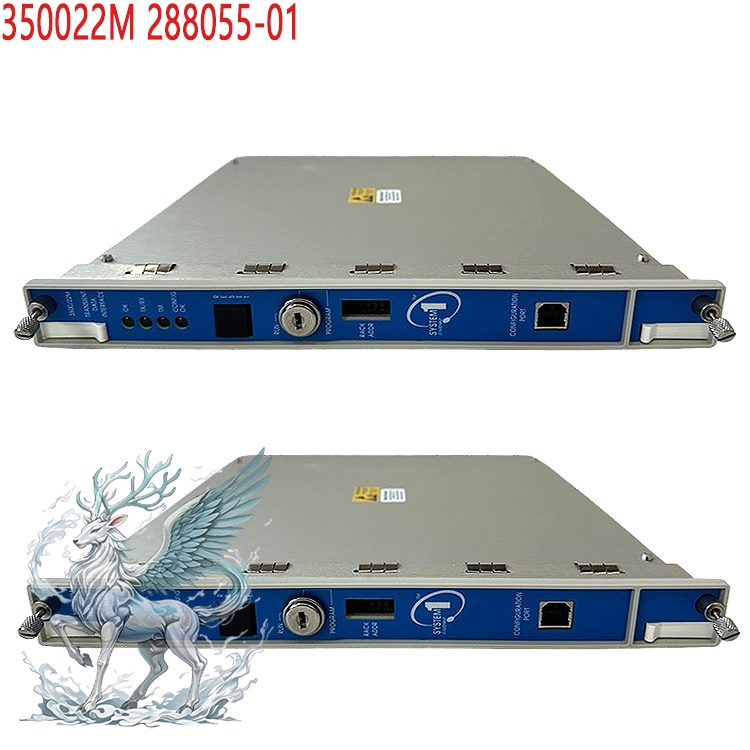
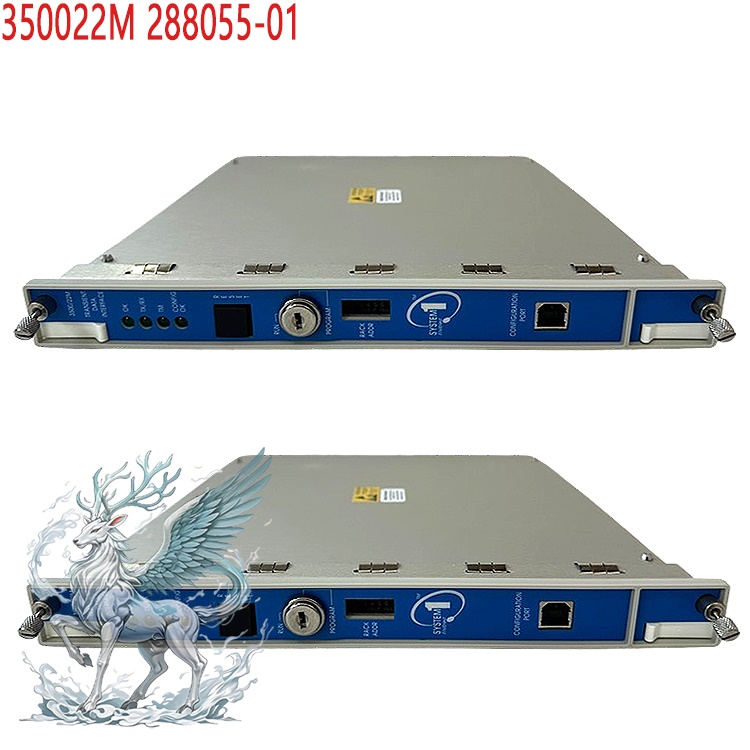
Attributes: The core component of the Bently Nevada 3500
series mechanical protection system,
as a Transient Data Interface (TDI) module, integrates rack interface and
communication processor functions, replacing the traditional RIM + external
processor combination.
Functional
Role: Serves as the interface between the 3500 system and host computer software
(such as System 1 status monitoring software), integrating the rack interface
module (RIM) and communication processor functions to achieve
steady-state/transient data acquisition, transmission, and remote
configuration.
.jpg)
Core
Functions:
Data
Acquisition: Supports 16-channel synchronous acquisition, 16-bit resolution, and
a sampling rate up to 100kHz, capable of capturing steady-state/transient
waveforms (such as vibration, shock events, and start/stop data).
Interfaces
and Communication:
Front
Panel: USB-B port, supporting local configuration.
Network
Interface: 10/100Base-TX Ethernet (RJ-45, maximum 100 meters), 100Base-FX fiber
optic Ethernet (MT-RJ, maximum 400 meters multimode fiber). Compatible with
Modbus TCP/IP and Bently proprietary protocols, supporting remote data
transmission to System 1 software or PLC systems.
Signal
Processing:
Input
Range: -10Vdc to +10Vdc, supports Keyphasor signals and speed input up to 20kHz
(e.g., rotating machinery speed monitoring).
Data
Types: Steady-state static values, transient waveform data (dynamic data
requires an optional channel activation panel).
Data
Acquisition and Transmission:
Real-time
acquisition of steady-state and transient dynamic data from M-series monitors
(e.g., 3500/40M, 3500/42M), transmitted to the host software via Ethernet/fiber
optic.
Supports
alarm-triggered data capture: Static values are acquired at 1-second intervals
10 minutes before/1 minute after the event; static values are acquired at
100-millisecond intervals 20 seconds before/10 seconds after the event; waveform
data is acquired at 10-second intervals 2.5 minutes before/1 minute after the
alarm.
.jpg)
Configuration
and Control:
Supports
switching between "Run" and "Programming" modes (via key switch) to prevent
accidental configuration modifications.
The
rack configuration software enables local/remote parameter settings and supports
Triple Module Redundancy (TMR) configuration to enhance system reliability.
Event
Logging and Analysis:
Memory
limits the number of transient events; supports programmable speed/time window
triggered data acquisition.
Used
for vibration analysis, fault diagnosis, mechanical performance optimization,
and power system stability monitoring.
Status
Indication: LEDs display communication status, configuration status, and data
acquisition before/after alarms.
Event
Management: Records data before/after alarms and start/stop trajectories;
supports speed-triggered sampling (e.g., 64-128 sampling points/revolution);
dynamic data storage capacity reaches 672 points.
Technical
Parameters:
Electrical
Characteristics: 24V DC power supply, power consumption 7.7-10.5W, operating
temperature -40°C to +85°C (some models -30°C to +65°C), protection rating
IP66/IP30.
Physical
Specifications: Approximately 9.5 × 4.5 × 1 inch (241 × 114 × 25 mm), weighing
0.85-1 kg, installed in rack slot 1 of the 3500 (near the power supply).
Compatibility:
Requires use with M-series monitors such as the 3500/40M and 3500/42M. Supports
System 1 status monitoring software and the 3500 configuration tool.
Application
Scenarios
Industry
Coverage: Heavy industries such as oil and gas, power, chemical, papermaking,
steel, water treatment, and general manufacturing.
Industrial
Equipment Monitoring: Vibration monitoring and health assessment of rotating
machinery such as engines, pumps, fans, and compressors.
Fault
Diagnosis: Recording and analysis of transient events (such as voltage surges
and mechanical shocks) to assist in predictive maintenance.
Automation
Systems: Factory automation, PLC controller data integration, and real-time
monitoring of smart grids.
.jpg)
Safety
Monitoring: Real-time alarms for abnormal equipment conditions to ensure
production safety.
Typical
Applications:
Rotating
Equipment Monitoring: Vibration analysis of turbine, compressor, and generator
bearings/gearboxes; fault prediction (e.g., bearing defects, gear wear).
Structural
Health Monitoring: Detection of seismic activity and structural stress
changes.
Predictive
Maintenance: Identification of early faults through spectrum/trend analysis,
reducing unplanned downtime.
Automation
Integration: Linkage with DCS and PLC systems to achieve closed-loop management
of equipment status and control logic.
Installation
and Maintenance Guide
Installation
Steps:
Preparation: Power off,
wear ESD protection equipment, back up rack configuration, and record IP/network
settings.
Slot
Positioning: Must be installed in rack slot 1 (next to the power supply) to
avoid communication failure due to incorrect insertion into other slots.
Wiring:
Connect Ethernet/fiber optic/USB-B, ensuring grounding continuity (insulation
resistance > 10MΩ).
Configuration:
Set rack mode (RUN/PROGRAM) using System 1 or 3500 configuration software, and
verify data flow and event logs.
Software
Configuration: Parameter settings are configured using the 3500 system
configuration software, supporting remote configuration download to the
module.
Redundancy
Design: Under TMR configuration, the module can compare redundant monitor
outputs, detect differences, and trigger error indications.
Troubleshooting:
No
Communication: Check IP configuration, slot location, and cable integrity (e.g.,
RJ45/fiber optic interface matching).
Data
Missing: Confirm channel is configured with disk access; check sensor power
supply and signal paths.
Intermittent
Failure: Investigate network interference, grounding issues, or firmware version
compatibility.
Advantages
and Precautions:
Performance
Advantages: High-precision acquisition, multi-protocol compatibility,
anti-interference design (EMC certified), long lifespan (battery life up to 38
years).
Usage
Notes:
The
module is not a protection trip path component, but its absence will result in
monitoring blind spots and loss of diagnostic capabilities.
Firmware
upgrades must match the rack version to avoid compatibility issues.
Regular
maintenance is required in industrial environments (e.g., cleaning connectors,
calibrating sensors).
In
summary, the 288055-01 module serves as the data hub for the Bently Nevada
machine protection system. Through high-speed, high-resolution data acquisition
and multi-protocol communication, it provides real-time status monitoring, fault
diagnosis, and predictive maintenance support for industrial equipment, and is
widely used in critical equipment reliability management scenarios. Installation
and configuration must strictly adhere to the manufacturer's guidelines to
ensure stable system operation and data accuracy.


 ABB
ABB GE
GE HONEYWELL
 TRICONEX
 KONGSBERG
 EMERSON
 FOXBORO
 MOTOROLA
 VIBRO-METER
 ICS TRIPLEX
 WOODWARD
 BENTLY NEVADA
 OTHER
OTHER Home
Home.jpg)
.jpg)
.jpg)


.jpg)