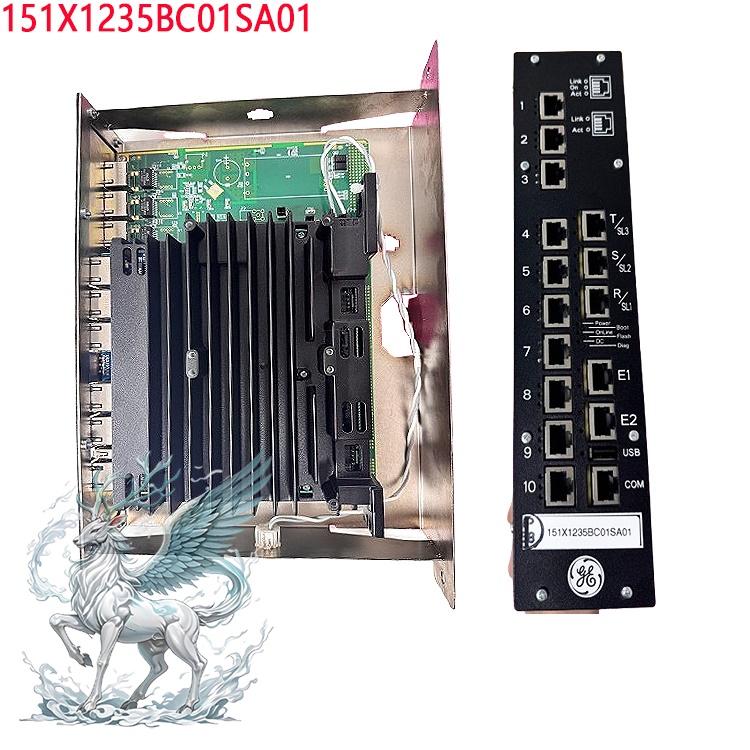
Many products are not yet listed. Please contact us for more product
information.
If the product model differs from the displayed image, the model number
shall prevail. Please contact us for specific product images; we will arrange to
take photos in our warehouse for confirmation.
We have 76 shared warehouses worldwide, so it may sometimes take several
hours to accurately return the information to you. We apologize for any
inconvenience. Of course, we will respond to your inquiries as soon as
possible.
In the vast landscape of GE's industrial control system, the
151X1233DD01SA02 is not an ordinary circuit board. From a product positioning
perspective, it is a signal processing board and power management module. Its
core responsibility is to amplify and condition the input signal, while
providing stable and clean power support for the entire turbine control system.
The 151X1233DD01SA02 signal processing board's core function is to process
and amplify the input signal. Simultaneously, in industrial backup power supply
scenarios, this series of modules also undertakes power management
responsibilities such as multi-channel DC regulated output, intelligent charging
control, and real-time monitoring of operating parameters.
This circuit board is widely used in wind power plant power supply and
industrial automation control systems, and is an important component of the GE DCS (Distributed Control System) ecosystem. Its metal casing provides shock and
dust resistance, and it operates over a wide temperature range. Its electrical
isolation design gives it strong resistance to electromagnetic
interference—especially crucial in the high-precision, high-interference
environment of turbine control.
I. Core Functions in Turbine Control
1. Signal Acquisition and Processing—The Turbine's "Nerve Center"
The essence of a turbine control system is the accurate acquisition and
rapid response to analog signals such as speed, pressure, and temperature. The
151X1233DD01SA02, as a signal processing board, is responsible for filtering,
amplifying, and converting the raw signals from sensors in turbine control
scenarios—signals of speed, pressure, and temperature are all "languages with
impurities"—involving the filtering, amplification, and conversion of these
signals to ensure the accuracy and reliability of the data acquired by the
control system. The 151X1233DD01SA02 amplifies these weak signals to a standard
level recognizable by the controller, while filtering out stray interference to
ensure the accuracy and reliability of the data received by the ECU (Electronic
Control Unit). Just like the design logic of control system boards such as the
GE DS6800CCIE1F1D—the input/output interface is the only window through which
the control system communicates with the outside world, and the 151X1233DD01SA02
acts as the "translator" of this window.
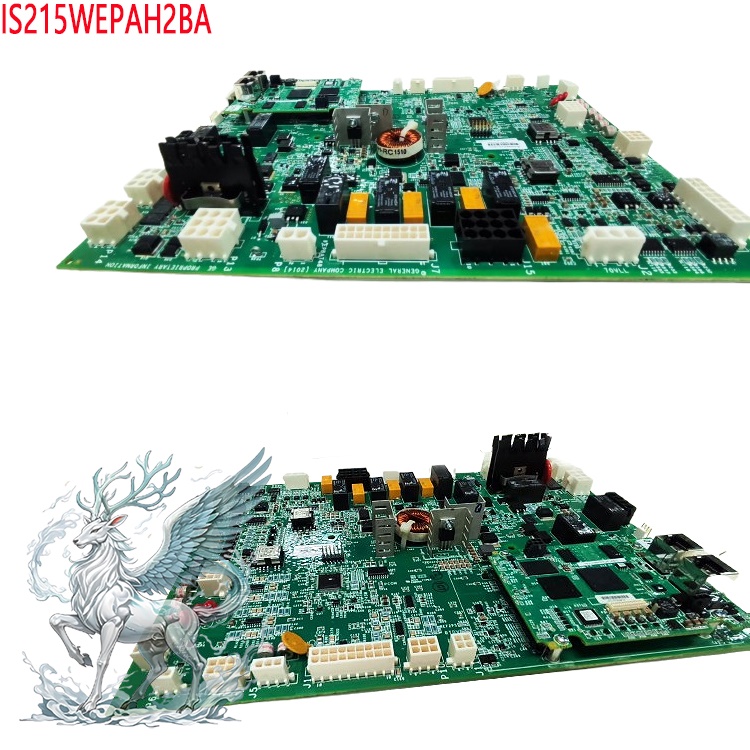
As demonstrated by the GE DS200CVMAG1AEB generator control turbine board,
GE's turbine control circuit boards typically feature high-performance
processors and multiple I/O interfaces, supporting communication protocols such
as Ethernet and serial ports. The 151X1233DD01SA02 also possesses this
capability—it can transmit key parameters such as turbocharger speed, intake
pressure, and exhaust temperature signals to the upper-level control system
(such as the Mark V turbine control system) in real time, providing a data
foundation for the ECU's decision-making.
2. Power Management – The “Energy Heart” of the Turbine System
In wind power and gas turbine scenarios, the turbine control system has
extremely high requirements for power supply stability. The power module of
151X1233DD01SA02 plays a decisive role here:
II. Significance of its Features in Turbine Control
AC mains input: Stable and convenient power supply ensures 24/7
uninterrupted operation of the control system.
Multiple DC regulated outputs: Adaptable to energy storage battery packs,
providing clean power to sensors, actuators, and solenoid valves.
Intelligent charging management: Extends battery life and ensures reliable
backup power switching during mains power outages.
Multiple safety protections: Timely anomaly warnings prevent equipment
damage caused by turbine runaway.
.jpg)
Real-time monitoring of operating parameters: Second-level warnings in
abnormal operating conditions avoid major accidents.
3. Parallel Redundancy – Enhancing System Reliability
This module supports parallel use, enhancing power supply redundancy. In
turbine control, this means that even if a single circuit board fails, the
system can still continue operating – a critical design consideration for key
infrastructure such as wind farms and gas power plants. III. Profound Impact on
Turbo Control Performance
1. Solving Turbo Lag
Turbo lag is a classic problem in turbocharged systems—after the driver
presses the accelerator, the turbocharger needs time to reach its operating
speed, resulting in a noticeable delay in power output. Based on the principle
of patented technology (CN 106640351 A), the electronically controlled actuator
collects angle signals through the ECU, drives the motor via a PID control
algorithm, and changes the flow cross-sectional area of the turbocharger
nozzle in real time, achieving optimal matching between the turbocharger and the
engine under all operating conditions.
151X1233DD01SA02 is the signal processing node in this closed-loop control
chain. It accurately analyzes the target angle signal from the ECU, drives the
actuator, and simultaneously provides feedback on the current angle through a
position sensor, forming an angle closed-loop control. Without the precise
signal processing of this board, real-time turbo adjustment is impossible.
2. Ensuring Precise Control of Boost Pressure
In automotive turbocharged systems, the normal operation of the boost
pressure control solenoid valve (N75) depends on the precise commands from the
control circuit board. When the diaphragm chamber pressure fails to open the
bypass valve, the turbine continues to rotate at high speed, leading to
excessive boost pressure—all of this judgment and correction requires real-time
calculation by the signal processing board. The 151X1233DD01SA02 is responsible
for this crucial computational task.
3. Improving Overall System Energy Efficiency
With electronically adjustable turbocharging technology, engine power can
be increased by 40%-50%, fuel consumption reduced by 10%-15%, and harmful
exhaust emissions reduced by 50%-80%. As the core processing unit in the control
chain, the accuracy and speed of signal processing by the 151X1233DD01SA02
directly determine whether these performance indicators can be achieved.
4. Power Supply Stability Determines System Reliability
Referring to the design principle of variable geometry turbocharger
electronic actuators, the actuator needs to drive a DC motor in real-time to
adjust the turbine nozzle flow cross-sectional area based on the angle signal
collected by the ECU using a PID control algorithm. This process requires
extremely high power purity—any voltage fluctuation can cause angle control
deviation, leading to turbo lag or boost runaway. The 151X1233DD01SA02's
multi-channel DC regulated output and low conversion loss design precisely
address this pain point. Low power conversion losses result in excellent
energy-saving performance, ensuring the control system receives "clean" power at
every operating point.
.jpg)
5. Redundant Design Ensures Uninterrupted Operation
The 151X1233DD01SA02 is widely used in the field of wind power plant
automation power supply. The turbine control system in a wind farm cannot
stop—even a second of downtime means a loss of power generation. Its parallel
operation capability provides the system with power redundancy, one of the
biggest differences between industrial-grade turbine control and automotive
turbine control: industrial scenarios have zero tolerance for reliability
issues.
IV. Conclusion
The 151X1233DD01SA02 is far more than just a circuit board. It is the
intersection of signal processing and power management in the GE turbine control
system, a bridge connecting sensors and actuators, and a crucial link in
ensuring the safe, efficient, and stable operation of the turbine system.
From the giant steam turbines of wind farms to the turbocharging systems of
car engines, the circuit board inside this metal casing silently supports every
precise control of modern industrial power systems with its wide operating
temperature range, shock and dust resistance, low loss, and high redundancy. In
the world of turbine control, it is both the "brain" and the "heart"—neither can
be missing.
1.Do you offer global shipping?
Yes. We have local distribution centers on every continent, enabling us to quickly ship parts to anywhere in the world.
2. What payment methods and currencies do you accept?
To make your purchasing process as simple and convenient as possible, we offer a variety of payment methods, including bank transfer, cheque, and PayPal. We also accept most major credit and debit cards, such as Visa, Mastercard, and American Express. We accept payments in most major global currencies, but we recommend using US Dollars (USD), British Pounds (GBP), or Euros (EUR). Using other currencies may incur additional fees. All transactions are securely processed by HSBC and HSBC Merchant Services.
3.How much parts do you currently have in stock?
We have a vast inventory of new, refurbished, and used automation components, including products from well-known manufacturers such as ABB and Schneider Electric. If you can't find the part you need, don't worry. We work closely with professional suppliers worldwide, and even if the part you need isn't listed on our website, we can provide you with a tailored quote.
4.Who should I contact if I encounter any problems?
Our experienced customer service team will handle any issues after you place your order.


 ABB
ABB GE
GE HONEYWELL
 TRICONEX
 KONGSBERG
 EMERSON
 FOXBORO
 MOTOROLA
 VIBRO-METER
 ICS TRIPLEX
 WOODWARD
 BENTLY NEVADA
 OTHER
OTHER Home
Home
.jpg)
.jpg)


.jpg)