Many products have not yet been listed online; please contact us for
information on our full range.
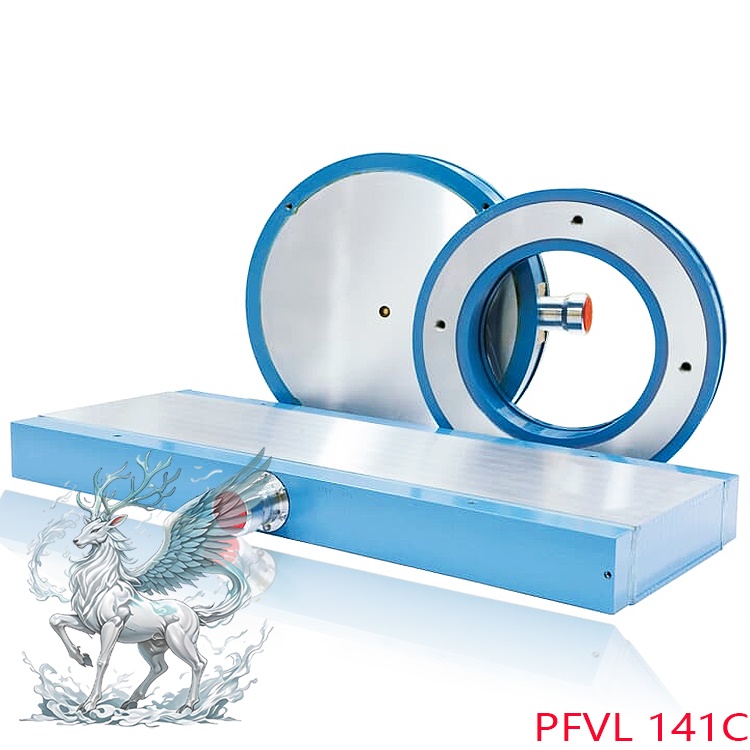
If there is a discrepancy between a product model and its displayed image,
the model number takes precedence. Please contact us if you would like to see
specific product photos; we can arrange for them to be taken at our warehouse
for your confirmation.
We operate 76 shared warehouses globally, so it may occasionally take a few
hours to provide you with an accurate response—we appreciate your patience. Rest
assured, we will address your inquiries as quickly as possible.
Alternative names for QGPR 104:
QGPR 104 Ring-type Pressductor® Force Transducer
QGPR 104 Load Cell
QGPR 104 Rolling Force Sensor
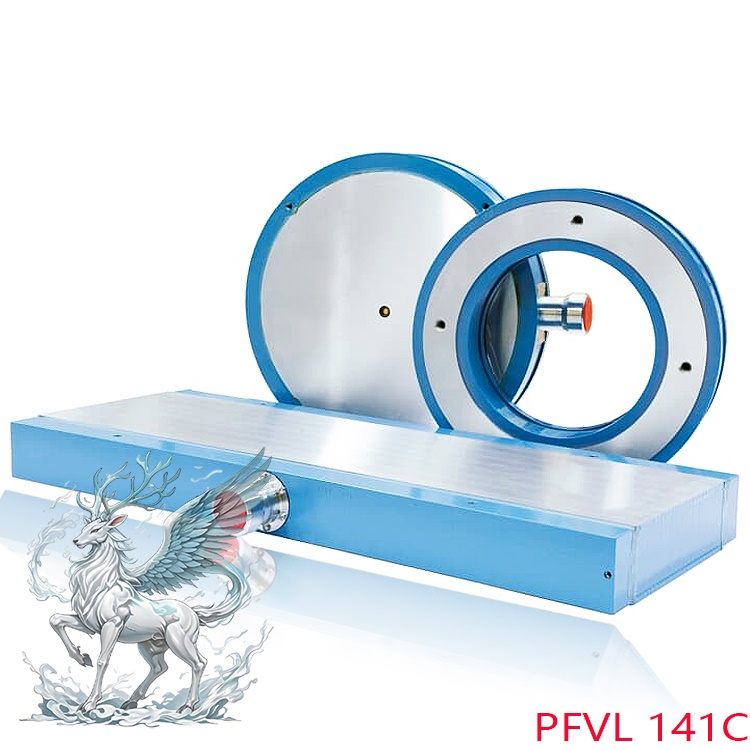
The QGPR 104 is part of the ABB Millmate series of ring-type rolling force
transducers, utilizing ABB’s classic Pressductor® magneto-elastic (pressductor)
technology. The QGPR 104 covers a range of 0.10–0.63 MN, while the QGPR 102—from
the same series—is designed for higher capacities (1.0–2.5 MN). The complete
system consists of the QGPR 104 sensor, a QIPZ 127 adapter unit, and a PFXA 401
controller. It is a primary solution for measuring rolling forces in
applications with limited installation space and low-to-medium rolling force
requirements, and is widely used in equipment such as tube mills and small
vertical-roll mills.
I. Operating Principle
The core measurement principle of the QGPR 104 is the Pressductor®
magneto-elastic effect. Unlike conventional strain-gauge sensors, it does not
rely on significant deformation of an elastic body to capture signals. The
sensor body contains four through-holes, through which two sets of mutually
perpendicular coils are wound: one set serves as the primary excitation coil
(supplied with an AC excitation current), while the other acts as the secondary
measurement coil. In an unloaded state, the magnetic fields of the two coil sets
are orthogonal, resulting in zero magnetic coupling and no induced voltage in
the secondary coil. When the sensor is subjected to axial rolling pressure,
stress develops within the ferromagnetic substrate, causing a directional change
in the material's magnetic permeability: permeability decreases in the direction
of the applied force and increases in the direction perpendicular to it. This
disrupts the initial symmetry of the magnetic field, causing the magnetic flux
to deflect and couple into the secondary coil, which generates an AC voltage
signal. The magnitude of this induced voltage is linearly proportional to the
rolling force; a downstream data acquisition unit converts the signal into a
precise force value. The entire measurement process relies solely on magnetic
field variations to translate force into an electrical signal. This involves
negligible physical deformation, eliminates issues such as strain-gauge creep,
and offers an virtually unlimited fatigue life under cyclic loading.
II. Product Advantages
Exceptional Overload Tolerance: The sensor can withstand instantaneous
overloads of up to 700% of its rated capacity without structural damage. It can
also endure short-term impact loads of 300% of the rated capacity without
causing a permanent shift in the calibrated zero point—making it well-suited for
harsh rolling mill environments prone to sudden impact events, such as steel
jams or overlapping steel sheets.
Superior Interference Resistance: The sensor outputs a high-power,
low-impedance AC signal with a high signal-to-noise ratio. It is highly
resilient to insulation degradation, maintaining stable measurements even when
insulation resistance drops. Furthermore, it effectively resists strong
electromagnetic interference and ground-fault issues typically caused by
variable-frequency drives (VFDs) and power cables in rolling mill
facilities.
Excellent Long-term Stability and Low Maintenance: Each unit is calibrated
prior to leaving the factory, eliminating the need for frequent on-site
recalibration during its operational lifespan. This avoids common issues like
strain-gauge aging and zero-point drift, thereby reducing downtime for
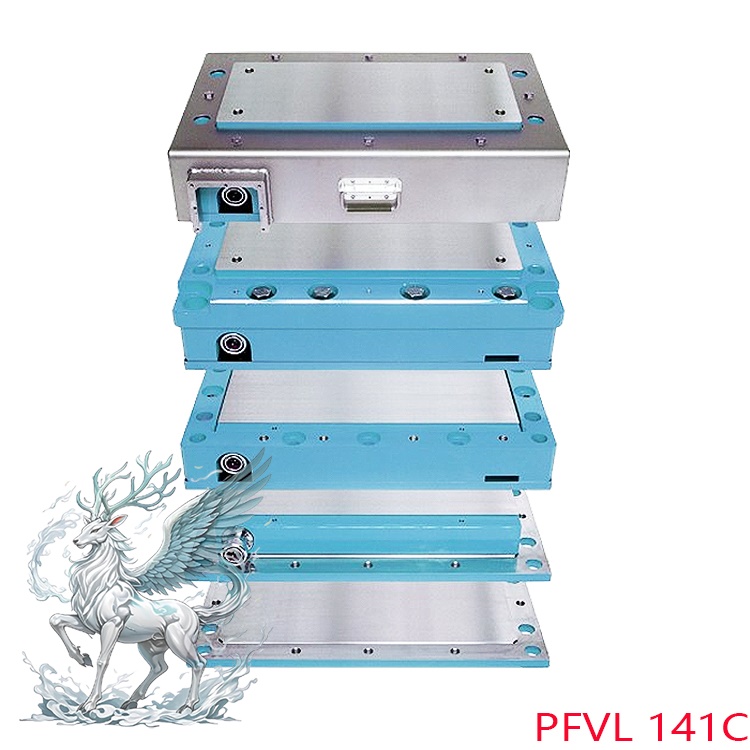
maintenance and lowering overall operational costs. Compact annular design for
space-constrained installations: Featuring an integrated annular structure, the
sensor is designed to be installed between the pressure nut and the rolling mill
housing. Compared to the rectangular PFVL series, this design occupies less
space, making it ideal for small-scale rolling mills and pipe mills where
installation space is limited.
Stable measurement performance with excellent interchangeability: Offers an
accuracy class of ±1.0% FS, linearity deviation ≤±1.0% FS, hysteresis ≤0.2% FS,
and repeatability error ≤±0.05% FS. Sensors of the same specification share
standardized calibration parameters; when replacing a unit, only a zero-point
reset is required—no recalibration is necessary.
High environmental adaptability and reliable sealing: Equipped with a
metal-sealed structure, the sensor is resistant to oil, cooling water, and dust
commonly found in rolling mill environments. It features temperature
compensation from +20°C to +80°C, an operating temperature range of -10°C to
+80°C, and can withstand short-term exposure to temperatures up to +110°C,
making it well-suited for the temperature fluctuations encountered in hot and
cold rolling processes.
Minimal deformation under load: Compression at rated load is only 0.05 mm,
ensuring virtually no change to the rolling mill’s roll-gap baseline and
preventing the introduction of additional errors into the existing roll-gap
control system.
III. Applicable Industries and Functions
Applicable Industries
Seamless steel pipe rolling, small-section steel rolling, small-scale hot
and cold rolling lines (including vertical roll stands), non-ferrous metal
rolling, and pressure-forming equipment for specialized profiles.
Core Role in Production Lines
Closed-loop roll-gap control: Provides real-time feedback on actual rolling
force to the mill’s control system. This data enables the roll-gap adjustment
mechanism to dynamically correct the gap, ensuring stable wall-thickness
tolerances for pipes and profiles, and reducing the rate of defective products
caused by thickness deviations. Rolling Mill Equipment Safety Protection:
Continuously monitors rolling loads. If a load exceeds the process threshold,
the system triggers an alarm and initiates load-relief protection. This prevents
overloading and potential fracture of critical load-bearing components—such as
rolls, mill housings, and screw-down mechanisms—thereby safeguarding the primary
rolling mill equipment.
Rolling Process Data Acquisition and Optimization: Continuously records
rolling force curves, providing process engineers with empirical data to adjust
rolling schedules, rolling speeds, and tension parameters. This facilitates the
optimization of rolling processes and increases the yield of finished
products.
Predictive Identification of Hidden Production Line Faults: Analyzes
abnormal fluctuations in rolling force to detect latent issues—such as defects
in incoming material, roll wear, or bearing seizures—well in advance. This
supports preventive maintenance and reduces unplanned downtime.
Production Quality Traceability: Integrates rolling force data into the
Manufacturing Execution System (MES), enabling the traceability of product
quality data and ensuring compliance with quality control standards in the
metallurgical and pipe-manufacturing industries.
IV. Standard Operating Procedures
1. Pre-installation Inspection
Verify the model and rated load specifications to ensure they match the
operating conditions. Inspect the sensor for any external damage, such as dents,
cracks, or compromised seals. Ensure that cable jackets are intact and
connectors are in good condition. Confirm that the associated QIPZ127 adapter
module and PFXA401 controller are the correct models; note that electronic units
from the QGPR series are not compatible with the PFVL series (PFVA401) and must
not be interchanged.
2. Mechanical Installation
Clean the contact surfaces on the mill housing and screw-down nut, ensuring
they are flat and free of metal shavings or protrusions. This ensures the sensor
is subjected solely to axial pressure. Position the sensor centrally to avoid
eccentric loading, lateral forces, or torsional stress. Tighten the screw-down
components evenly; do not apply excessive force to one side of the sensor. Once
installed, verify that the sensor is neither jammed nor tilted.
3. Electrical
Wiring
Connect the sensor cables to the QIPZ127 adapter unit according to the
official ABB diagrams, and then connect the adapter unit’s signal output to the
PFXA401 controller. Ensure that cable routing is kept away from strong
interference sources, such as power cables or variable-frequency drives (VFDs).
Secure the cables properly and implement adequate waterproofing and protective
measures. Once wiring is complete, double-check all connections against the
wiring definitions to prevent miswiring or short circuits.
4. Power-up and Commissioning
Power on the controller while the rolling mill is in an unloaded state.
Perform a zero-point calibration (tare) while the mill is unloaded. Apply loads
incrementally, verify the force readings on the controller, and confirm that the
output exhibits linear behavior. After commissioning, conduct a manual test
run—ensuring that the force feedback remains stable without erratic
fluctuations—before switching to automatic rolling mode.
5. Daily Operation
During normal production, operators should monitor the rolling force values
via the control system interface. Before stopping the mill for roll changes or
maintenance, ensure that all rolling loads are completely removed before
powering down the equipment. Periodically export and archive historical rolling
force data.
V. Precautions
Load Constraints: The QGPR 104 is designed to withstand only pure axial
compressive force. Lateral forces, bending moments, and torsional moments are
strictly prohibited. Off-center loading will lead to measurement inaccuracies
and, in severe cases, may cause permanent damage to the sensor. The mounting
surfaces must be flat and parallel.
Load Usage Guidelines: It is recommended that operational process loads be
maintained within 30% to 80% of the rated load. While the sensor can withstand a
transient impact load of up to 700% of its rated capacity, continuous operation
at loads exceeding 300% of the rated capacity is not permitted. Temperature and
Environmental Protection: The operating temperature of the unit should not
consistently fall outside the range of -10°C to +80°C. Avoid direct exposure to
flames or intense heat from nearby steel billets. Ensure cable connections are
properly waterproofed to prevent the ingress of cooling water or emulsions.
Disassembly and Maintenance Requirements: Disassembly must only be
performed when the rolling pressure has been completely relieved and the
equipment is powered down. Do not use pry bars to strike the sensor body. During
lifting or hoisting operations, take care to prevent any impact to the
sensor.
Spare Parts Replacement: When replacing a sensor, prioritize using the same
model (QGPR 104). A zero-point calibration must be performed after any
replacement. Do not mix PFVL series modules with incompatible controllers.
Maintenance Prohibitions: Do not open the sensor’s sealed metal housing;
the internal coils and magneto-elastic components are permanently sealed.
Unauthorized disassembly will void the warranty and compromise measurement
accuracy. Do not clean the sensor body with strong acid or alkaline agents.
Troubleshooting Procedure: In the event of abnormal force readings, first
inspect the mounting contact surfaces, cables, adapter units, and the
controller. Since the sensor itself rarely fails, consider it a potential cause
only after all external factors have been ruled out.
Recommended products:
PFCL201CE-150 KN 3BSE006699D0005
PFCL201C 20KN 3BSE023409R20
PFCL201CE 10KN 3BSX105983-100
PFCL201CE 50KN 3BSX802939-108
PFTL101B 5.0KN 3BSE004191R1
PFTL101B 5.0KN 3BSE004191R1
PFTL101B 20KN 3BSE004203R1
PFTL201C 10KN 3BSE007913R0010
PFTL201C 50KN 3BSE007913R50
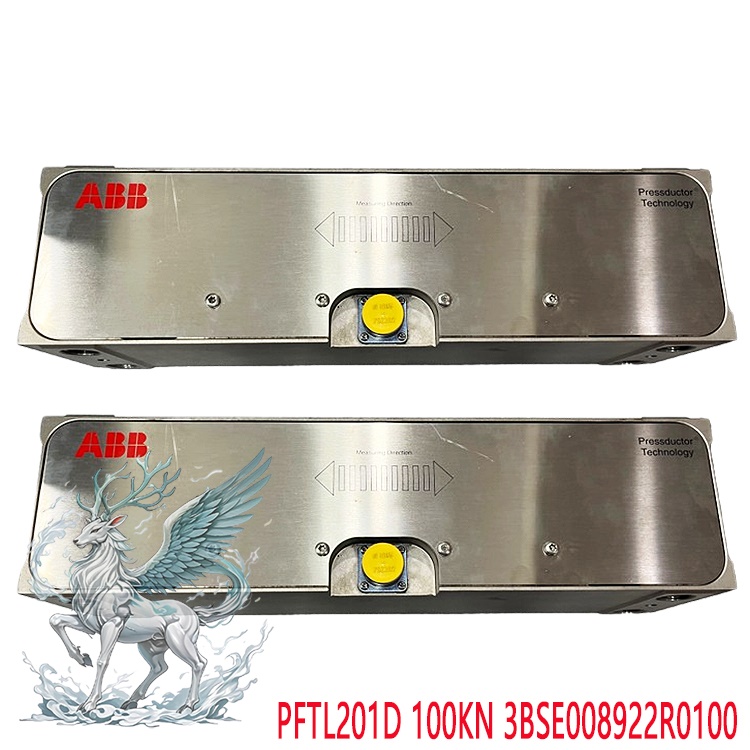
PFTL201D 100KN 3BSE008922R0100
More.....
1.Do you offer global shipping?
Yes. We have local distribution centers on every continent, enabling us to quickly ship parts to anywhere in the world.
2. What payment methods and currencies do you accept?
To make your purchasing process as simple and convenient as possible, we offer a variety of payment methods, including bank transfer, cheque, and PayPal. We also accept most major credit and debit cards, such as Visa, Mastercard, and American Express. We accept payments in most major global currencies, but we recommend using US Dollars (USD), British Pounds (GBP), or Euros (EUR). Using other currencies may incur additional fees. All transactions are securely processed by HSBC and HSBC Merchant Services.
3.How much parts do you currently have in stock?
We have a vast inventory of new, refurbished, and used automation components, including products from well-known manufacturers such as ABB and Schneider Electric. If you can't find the part you need, don't worry. We work closely with professional suppliers worldwide, and even if the part you need isn't listed on our website, we can provide you with a tailored quote.
4.Who should I contact if I encounter any problems?
Our experienced customer service team will handle any issues after you place your order.


 ABB
 GE
 HONEYWELL
 TRICONEX
 KONGSBERG
 EMERSON
 FOXBORO
 MOTOROLA
 VIBRO-METER
 ICS TRIPLEX
 WOODWARD
 BENTLY NEVADA
 OTHER
 Home
.jpg)