Many products have not yet been listed online; please contact us for information on additional items.
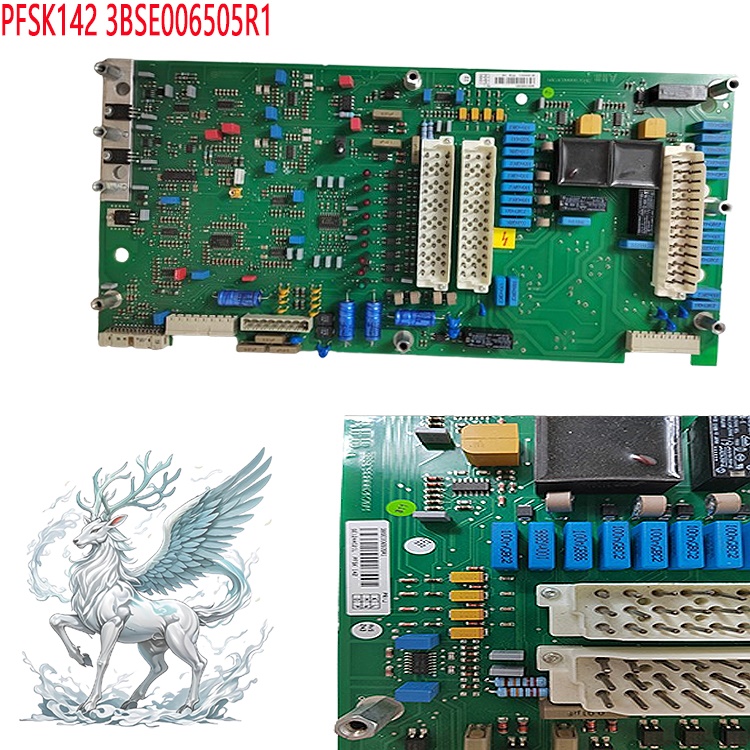
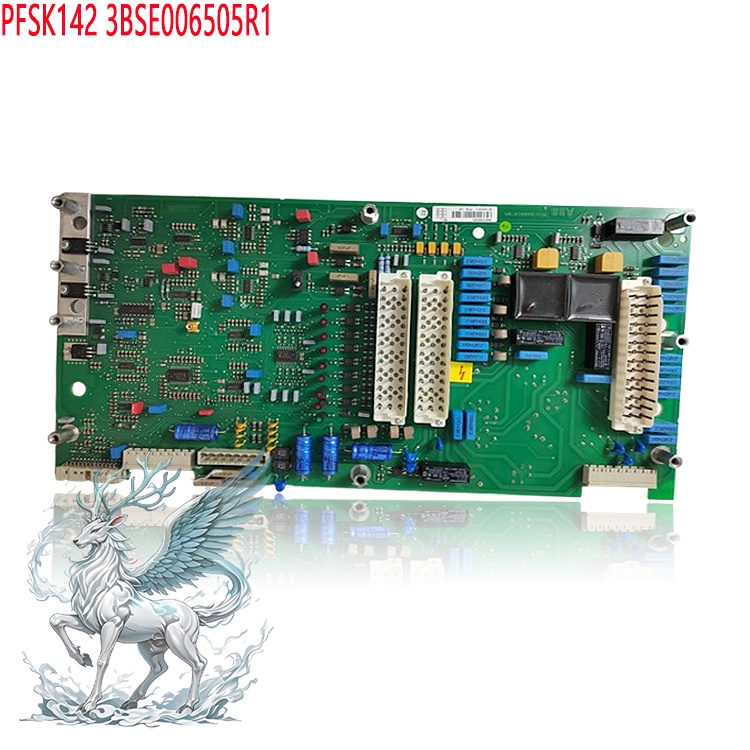
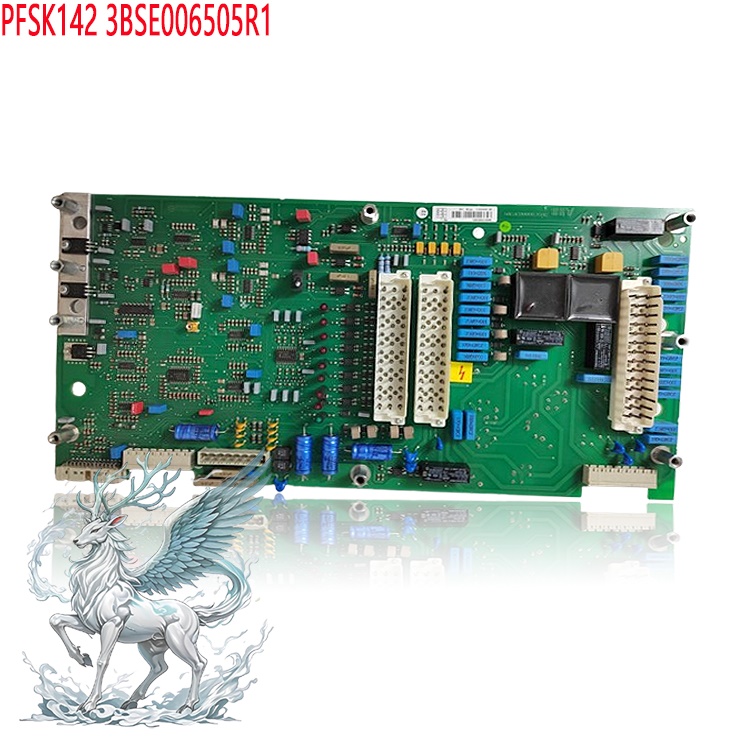
If there is a discrepancy between a product model and its displayed image, the model number shall take precedence. Please contact us if you would like to see specific product photos; we can arrange for our warehouse team to take pictures for verification.
We operate 76 shared warehouses globally, so it may occasionally take a few hours to provide you with an accurate response—we appreciate your patience. Rest assured, we will address your inquiries as quickly as possible.
Alternative names for PFSK 126 3BSE002097R1:
PFSK 126 3BSE002097R1 Industrial automation control board
PFSK 126 3BSE002097R1 operator board
Digital I/O module PFSK 126 3BSE002097R1
I. Operating Principle
The PFSK 126 3BSE002097R1 operates via a rack-based backplane bus architecture. Raw signals from sensors and actuators—collected by various field I/O modules—are routed into this module. Internal circuitry performs signal filtering, noise reduction, data normalization, and preprocessing to eliminate field-related interference. The processed, valid data is then transmitted via a high-speed backplane bus to the main controller. Simultaneously, the module receives control commands from the main controller and forwards them to the appropriate I/O channels, facilitating bidirectional data exchange. The module features built-in hardware self-diagnostic circuitry that continuously monitors the power supply status, bus links, and core board circuits. In the event of an anomaly, it immediately reports a fault code to the control system, enabling maintenance personnel to quickly identify and locate the issue.
II. Product Advantages
Strong System Compatibility: Designed for native compatibility with ABB 800xA and AC800M series DCS platforms, the module integrates seamlessly with other ABB I/O boards and communication modules within the same rack, making it an ideal choice for the retrofitting or expansion of existing automation systems. Excellent Anti-Interference Performance: Features industrial-grade isolation and EMC-compliant design, capable of withstanding electromagnetic noise and voltage fluctuations in heavy industrial environments, ensuring continuous and stable signal transmission.
Built-in Online Self-Diagnostics: Performs real-time monitoring of hardware circuits and communication links. Fault information is automatically transmitted to the control system, reducing troubleshooting time and minimizing downtime-related maintenance costs.
Rack-Mountable, Hot-Swappable Design: Designed for standard sub-rack installation with a compact footprint, saving space in control cabinets. The modular architecture facilitates easy replacement of spare parts and future system expansion.
High Data Real-Time Capability: Utilizes a high-speed backplane transmission mechanism with minimal latency in signal pre-processing and forwarding, meeting the real-time data exchange requirements of continuous process control loops.
III. Applicable Industries and Functions
Chemical Industry: Used in DCS (Distributed Control System) environments for continuous chemical production. It aggregates signals from temperature, pressure, level, and flow transmitters, pre-processes them, and relays the data to the main controller. This ensures continuous monitoring and regulation of reactors, pipelines, and storage tanks, helping to prevent process instability.
Power Industry: Employed in auxiliary control and thermal monitoring systems for power plants. It collects signals from valves, pump sets, and temperature sensors, enabling remote monitoring and interlocking control for boilers, steam-water systems, and desulfurization/denitrification units.
Paper Industry: Integrated into paper production line DCS, it processes field signals such as machine speed, tension, and pulp consistency. It stabilizes drive systems and process control loops, ensuring consistent product quality.
Metallurgical Industry: Used within control systems for rolling lines, sintering processes, and heating furnaces. It relays various detection signals, supporting automated, interlocked control of parameters like temperature, pressure, and roller conveyor operations.
Water Treatment Industry: Utilized in distributed control systems for wastewater and water purification plants. It collects signals from water quality instruments, valves, and pumps, enabling automated regulation of processes such as chemical dosing, filtration, and aeration. Overall Function: Serves as the core interface processing unit within a large-scale process automation DCS (Distributed Control System) rack. It establishes a data channel between field I/O units and the DCS main controller, offloads the burden of signal pre-processing from the main controller, and ensures the reliable transmission of process data from the field and the delivery of control commands to the field.
IV. Operating Procedures
Pre-installation Check: With the power disconnected, verify the module model and ensure there is no physical damage. Inspect the backplane slots and terminal bases to confirm they are in good condition, and verify that the power supply specifications meet the system’s 24V DC requirement.
Rack Installation: Align the module with the sub-rack slot, push it steadily and vertically into the backplane guide, and secure the locking clips. Ensure that the backplane bus contacts are fully and properly engaged.
System Wiring: Complete the power supply and functional grounding connections according to the wiring diagrams. Ensure all connections are tight, observe the correct polarity (positive/negative) for the power supply, and prevent incorrect or loose connections.
Power-up and Configuration: Once all wiring has been verified, power on the rack. In the ABB Control Builder software, import the hardware configuration, add the PFSK 126 3BSE002097R1 module, assign the station address and bus parameters, and download the configuration to the controller.
Online Commissioning: After the configuration is downloaded, access the system diagnostics interface to check the module’s communication and channel status, ensuring there are no hardware errors. Perform integrated testing with field sensors and actuators to verify that data transmission and command execution are functioning correctly.
Shutdown and Removal: Disconnect the power supply to the rack and any external power sources for field signals. Once the system is completely powered down, release the locking clips and carefully remove the module.
V. Precautions
This module is a precision industrial circuit board. Hot-swapping (inserting or removing the module while the power is on) is strictly prohibited. Performing such actions without meeting the manufacturer’s specific conditions for hot-swapping can damage the backplane bus and the module’s internal chips, potentially causing a system crash. Ensure the control cabinet environment remains dry and dust-free. Keep it away from areas exposed to corrosive gases, intense radiation, or strong vibrations. This equipment is not intended for use in explosion-hazardous zones.
Supply power strictly according to the rated voltage; do not exceed the specified voltage. Ensure a reliable functional ground connection to minimize communication interruptions or signal drift caused by electromagnetic interference.
During wiring, keep signal circuits separate from power supply circuits to prevent short circuits or reverse polarity. Route cables away from power lines to reduce electromagnetic coupling interference.
Do not disassemble the module housing. There are no user-serviceable parts inside; if a module fails, replace it with a spare unit rather than attempting repairs.
During storage and handling, implement anti-static measures—such as wearing an anti-static wrist strap—to prevent latent damage to internal chips, which could otherwise lead to unpredictable, intermittent failures later on.
Before performing system upgrades or hardware modifications, back up the DCS configuration program to prevent data loss that could pose risks to production.
This equipment serves solely as a unit for standard signal pre-processing and bus interfacing; it must not be used independently as a safety control module for a Safety Instrumented System (SIS). Safety interlock loops require the use of equipment with appropriate SIL (Safety Integrity Level) certification.
Recommended products:
3BSE018877R1 PFSK 152
3BSE018876R1 PFSK 151
3BSE021180R1 PFSK 164
UAD206A101 3BHE019958R0101
UAD206A 3BHE019958R0101
3BHE026866R0101 UAD155A
3BHE012551R0001 UAD142
PP D113 B01-26-111000 3BHE023784R2630
3BHE023784R2630 PPD113
3BHE014135R0011 UAD149
3BHE014135R0011 UAD149A
More......
1.Do you offer global shipping?
Yes. We have local distribution centers on every continent, enabling us to quickly ship parts to anywhere in the world.
2. What payment methods and currencies do you accept?
To make your purchasing process as simple and convenient as possible, we offer a variety of payment methods, including bank transfer, cheque, and PayPal. We also accept most major credit and debit cards, such as Visa, Mastercard, and American Express. We accept payments in most major global currencies, but we recommend using US Dollars (USD), British Pounds (GBP), or Euros (EUR). Using other currencies may incur additional fees. All transactions are securely processed by HSBC and HSBC Merchant Services.
3.How much parts do you currently have in stock?
We have a vast inventory of new, refurbished, and used automation components, including products from well-known manufacturers such as ABB and Schneider Electric. If you can't find the part you need, don't worry. We work closely with professional suppliers worldwide, and even if the part you need isn't listed on our website, we can provide you with a tailored quote.
4.Who should I contact if I encounter any problems?
Our experienced customer service team will handle any issues after you place your order.


 ABB
 GE
 HONEYWELL
 TRICONEX
 KONGSBERG
 EMERSON
 FOXBORO
 MOTOROLA
 VIBRO-METER
 ICS TRIPLEX
 WOODWARD
 BENTLY NEVADA
 OTHER
 Home
.jpg)